
Built for the people responsible for water
Lake, tank or plant: nitrogen can turn from invisible to costly in hours.
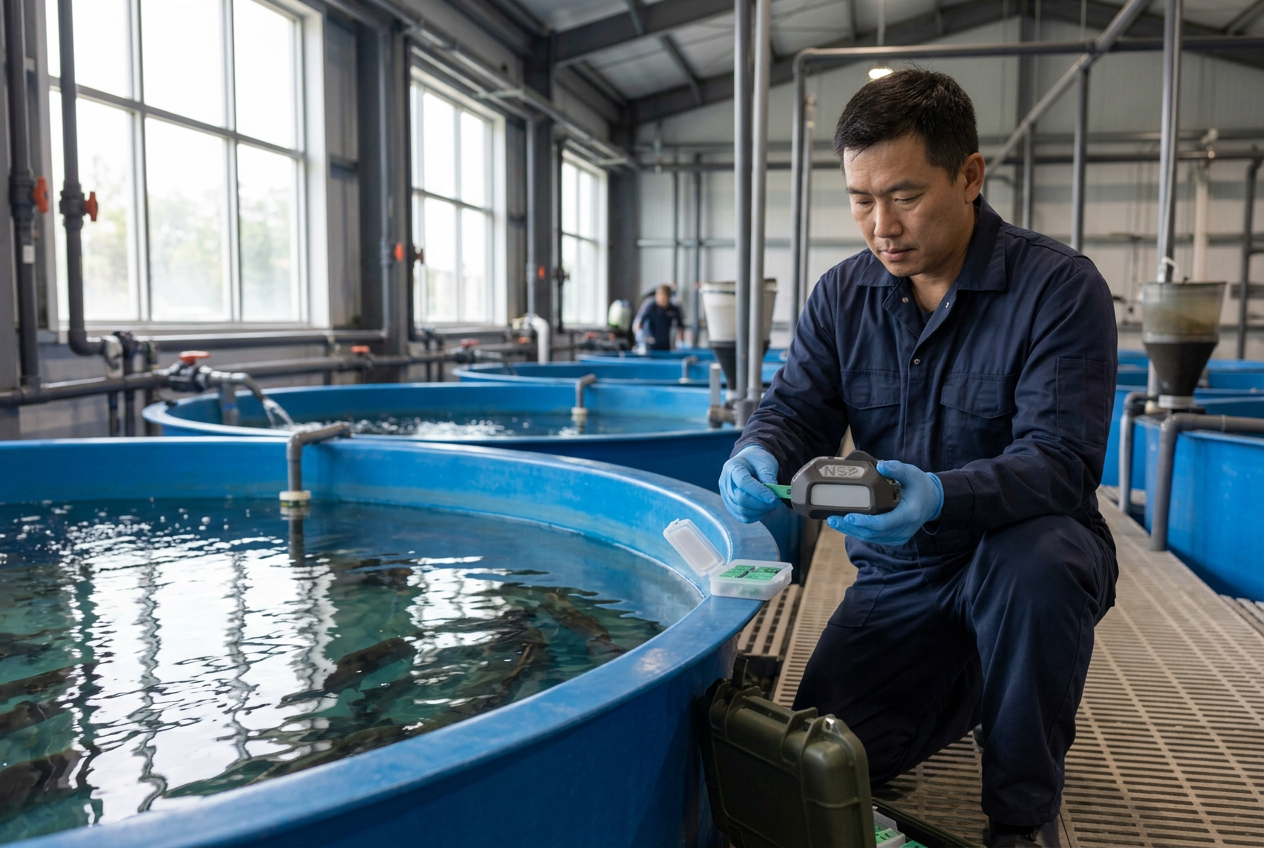
Catch nitrite before it catches your fish
Which water typesFreshwater and marine
“A biofilter can crash overnight. We run color kits twice a day and still catch nitrite spikes too late.”
- The problem
- In recirculating systems, the biofilter is fragile. When it falters, nitrite builds up and stock is at risk within hours.
- How Specio helps
- Specific nitrite readings at every tank, every shift, without wet chemistry.
- A typical day with Specio
- Specio checks each biofilter outlet after a feeding cycle; a rising reading triggers action before fish are stressed.
Why operators test
To protect stock. Nitrite and ammonia can build up quickly when a biofilter struggles, and the cost of a late reading is measured in lost fish.
The regulatory picture
No rules govern nitrite inside tanks and ponds. The decision to measure is economic, so speed and simplicity matter most.
$1.9 billion in US aquaculture sales in 2023, from 3,453 farms.
Source: USDA NASS, 2023 Census of Aquaculture.
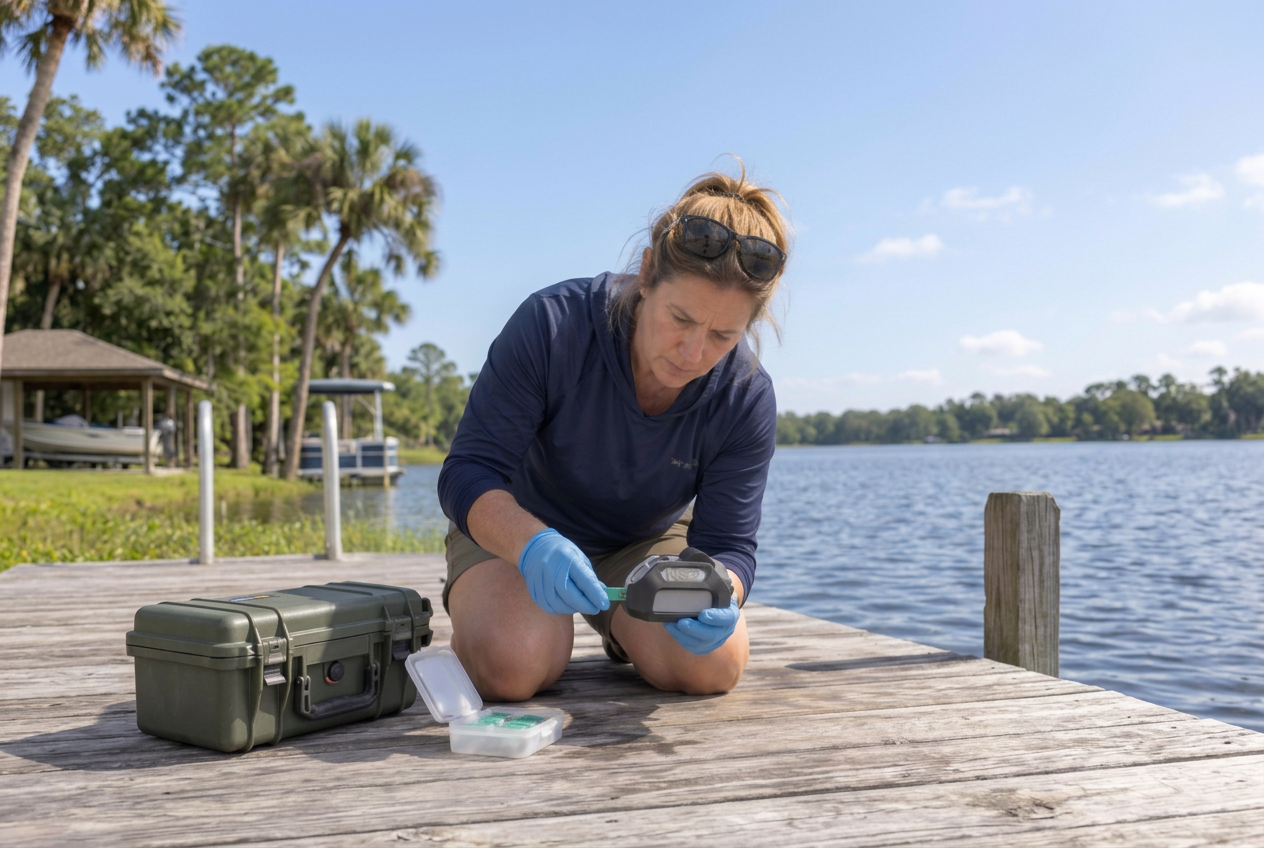
Know your lake between lab reports
Which water typesLakes, rivers, estuaries and coastal waters
“I steward 40 lakes on a lab budget for a handful of samples a month. Results arrive after the bloom has started.”
- The problem
- Lab sampling is too sparse and too slow to catch nutrient pulses after storms or to track interventions like wetlands.
- How Specio helps
- Affordable, specific readings anywhere, so you sample more often and send the right samples to the lab.
- A typical day with Specio
- Weekly readings at fixed stations, extra readings at inflows after storms.
Why stewards test
To catch nutrient problems before blooms, and to protect property values, recreation and public trust.
The regulatory picture
Lakes are protected through water quality standards and impaired-water lists, but most lakes have no monitoring mandate. Programs run on tight, often grant-funded budgets.
47% of US lakes are in poor condition for nitrogen.
Source: EPA National Lakes Assessment, 2022.
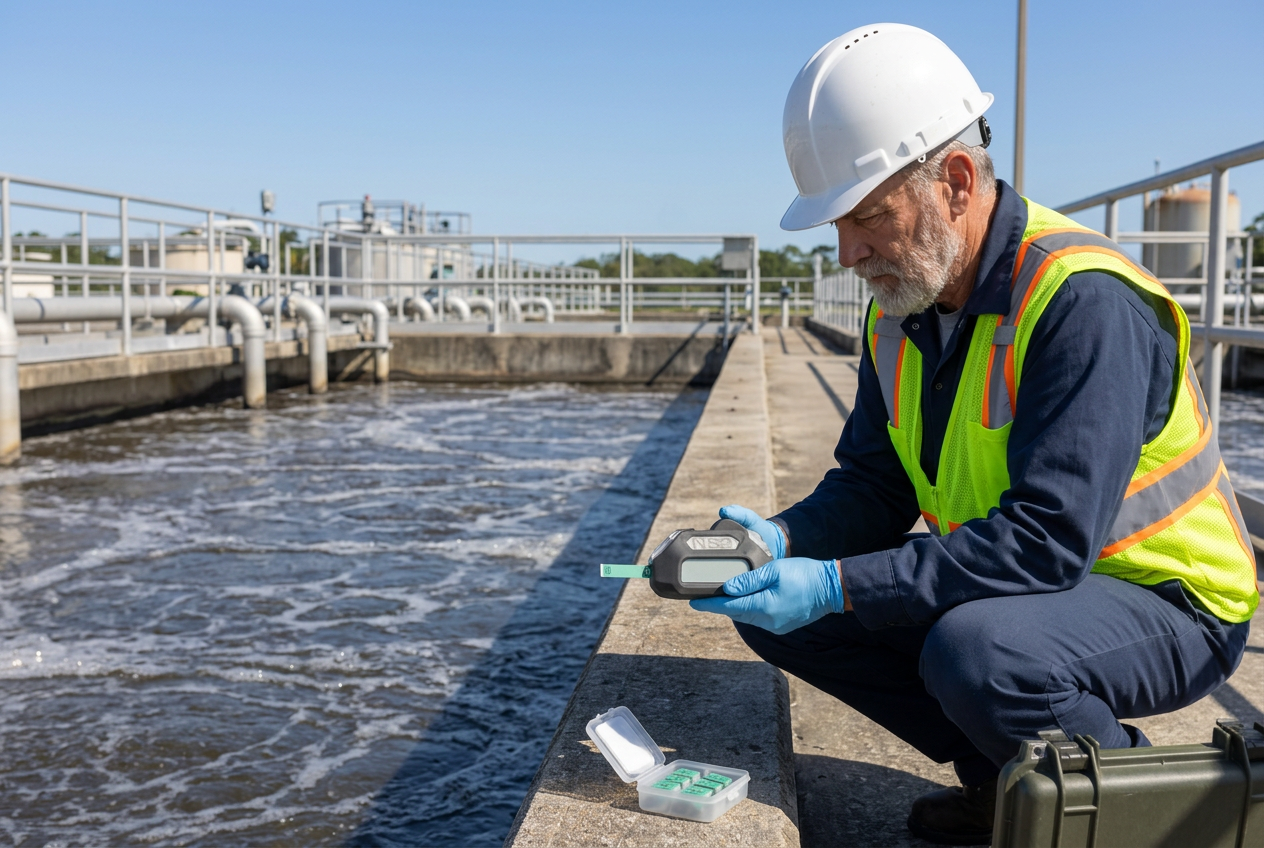
Control nitrogen in minutes, not days
Which water typesMunicipal and industrial
“Nitrogen limits keep tightening. Probes drift, lab results take days, and every guess costs us carbon and chemicals.”
- The problem
- Online probes drift and often report nitrate and nitrite together. Nitrite also degrades in samples sent to a lab. Advanced processes such as partial denitrification and anammox depend on controlling nitrite precisely.
- How Specio helps
- On-site nitrite readings to verify probes, spot problems between zones and tune carbon dosing.
- A typical day with Specio
- Spot checks across treatment zones and a daily probe verification.
Why operators test
To run the process well: aeration energy, carbon dosing and nitrification health, between compliance samples.
The regulatory picture
Discharge permits set ammonia and nitrogen limits, and compliance results must come from approved laboratory methods. Specio supports the daily decisions that keep a plant inside those limits.
17,544 public wastewater treatment plants serve 270 million Americans.
Source: EPA Clean Watersheds Needs Survey, 2022.
Every nitrogen tool makes a trade-off
Speed, reach, trust and cost rarely come together. Here is how the main categories of tools compare.
| Tool category | Answer in minutes | Anywhere, by anyone | Specific and quantitative | Low cost to cover many sites |
|---|---|---|---|---|
| Certified laboratories | ||||
| Color strips and test kits | ||||
| Ion-selective probes | ||||
| Online analyzers | ||||
| Specio (nitrite today) |
Honest trade-off: color strips remain cheaper per test, and online analyzers are the right choice for 24/7 alarms at a fixed point. Specio is built for trusted answers at many points, fast.
See what Specio can help you measure today
Ratings are Specio's qualitative assessment.
Keep your lab. Keep your sensors. Add the fast, specific answer in between.