Specific by design
Enzymatic recognition targets one nitrogen form, even in salty or murky water.
Each Specio test strip is a miniature lab, engineered layer by layer to give one specific nitrogen answer in minutes.
Hover, tap or tab through each layer to see what it does.
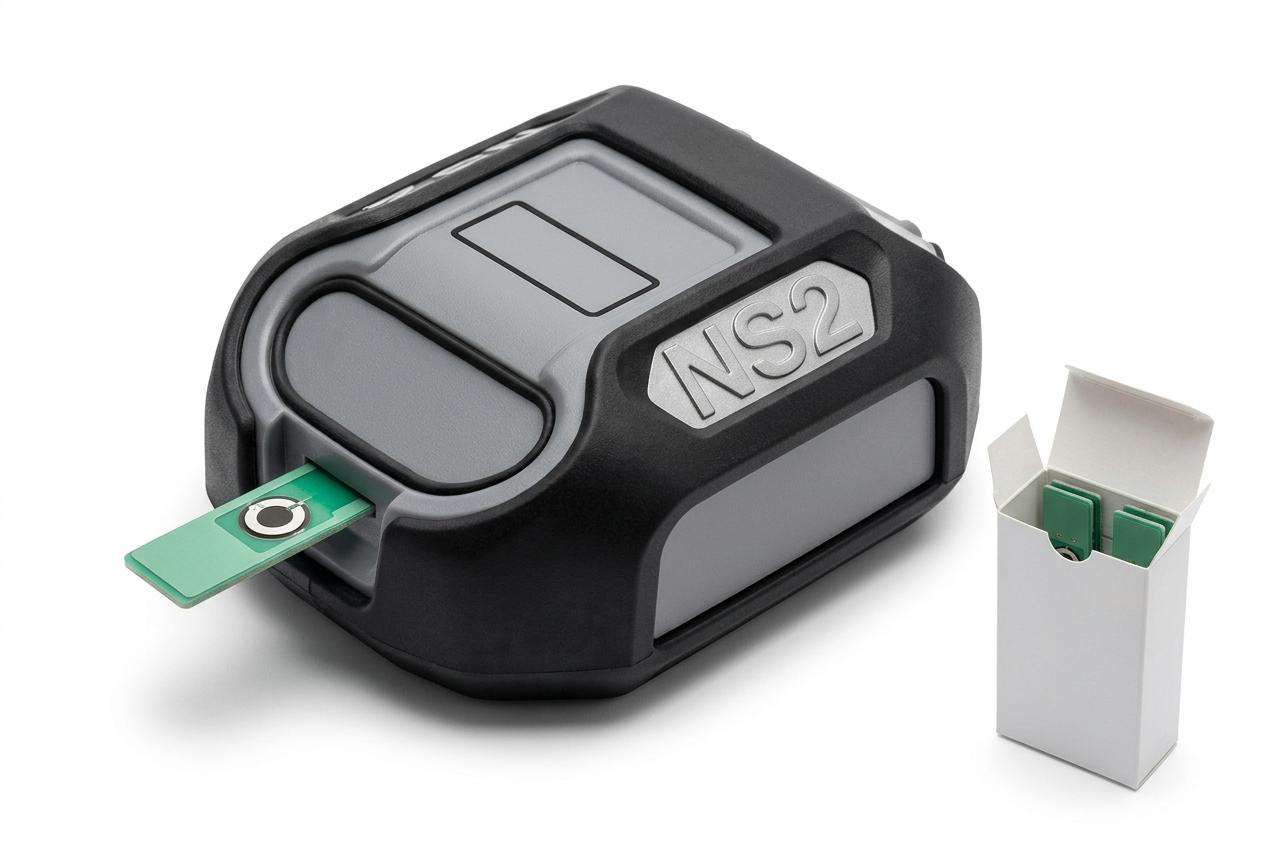
The reader is the other half of the test. The cartridge slides into one end; the reader powers it, reads the current it produces and sends a clear number to your phone over Bluetooth. There is no screen to learn — your phone is the display. No bench, no reagents, no calibration step.
Routine checks stay affordable because they stop going to a lab: a Specio test costs a fraction of a certified lab test.
Enzymatic recognition targets one nitrogen form, even in salty or murky water.
European patent granted · US patent pending.
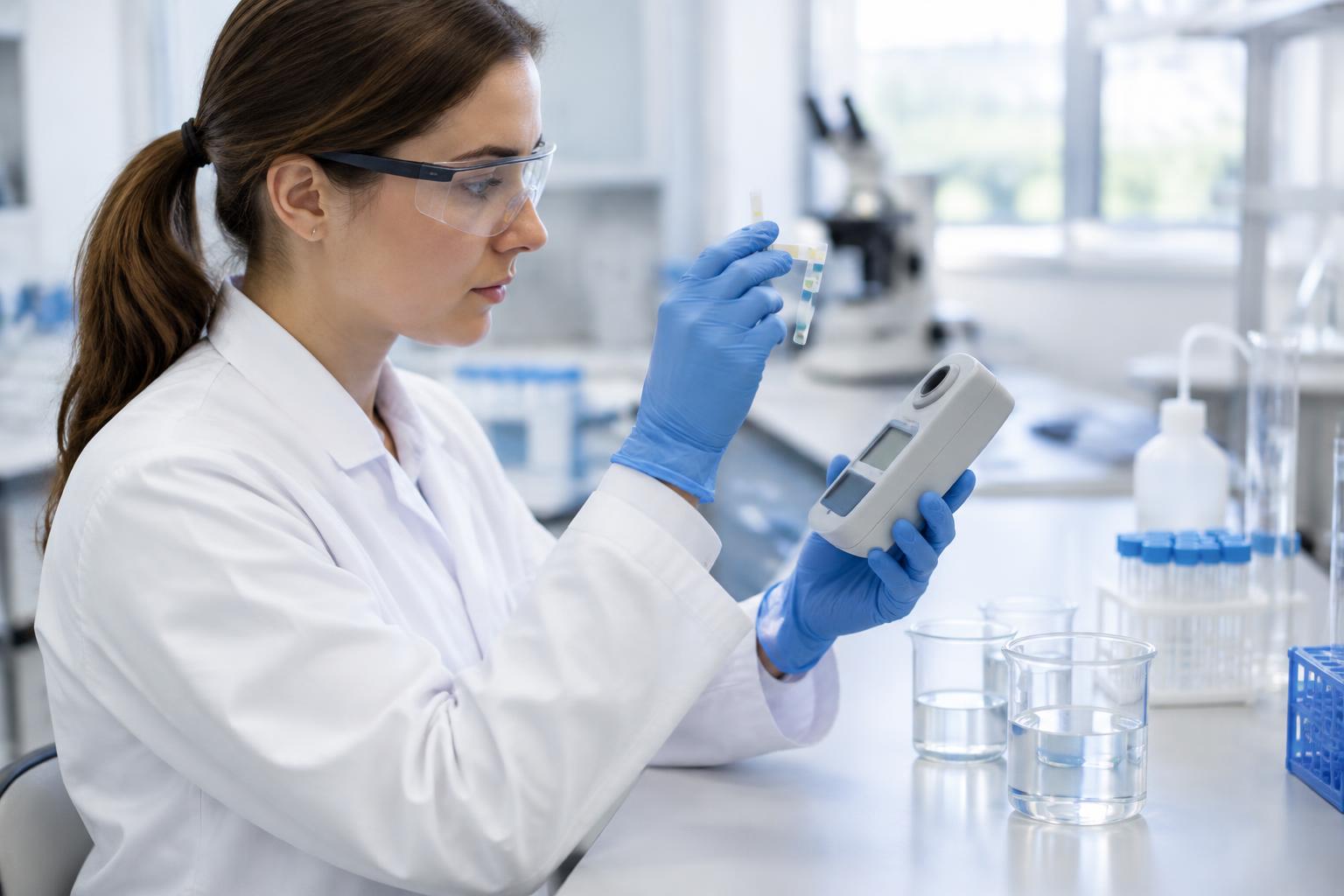
We measure current, not color, so cloudy or colored water doesn't distort results.
Each strip carries its own calibration (QR code). No standards, no setup.
Enzyme-based methods already have regulatory standing. An enzyme nitrate method is a US Geological Survey standard method.
Specio works alongside certified labs and online sensors, not against them. Most well-run water systems need all three.
The certified record
Best for: Compliance reporting, baselines, full nutrient panels.
Limits: Results take days, and budgets allow few samples.
The fast, specific answer
Best for: Daily checks, the gaps between lab samples, checking sensors, choosing which samples to send to the lab.
Limits: Spot tests, not continuous.
The continuous trend
Best for: 24/7 alarms and process control at fixed points.
Limits: Costly per site; drift and fouling need regular checks.
In pilots with fish farms in Scotland, Norway and Portugal, Specio nitrite readings agreed with the Griess method, the laboratory reference, across trout, salmon smolt, carp, tilapia and shrimp systems.
| Measurement | Freshwater & wastewater | Marine & brackish |
|---|---|---|
| Nitrite (NO₂⁻) | Available now | Available now |
| Nitrate (NO₃⁻) | Launching 2027 | Launching 2027 |
| Ammonia (NH₃) | Available now | Launching 2028 |
Availability depends on salinity, not source. Municipal wastewater is low-salinity. High-salinity industrial wastewater: contact us.
Biosensors and Bioelectronics
Read the research summaryBiosensors and Bioelectronics
Read the research summaryElectrochemistry Communications
Read the research summarySensors and Actuators B: Chemical
Read the research summaryTalanta
Read the research summary