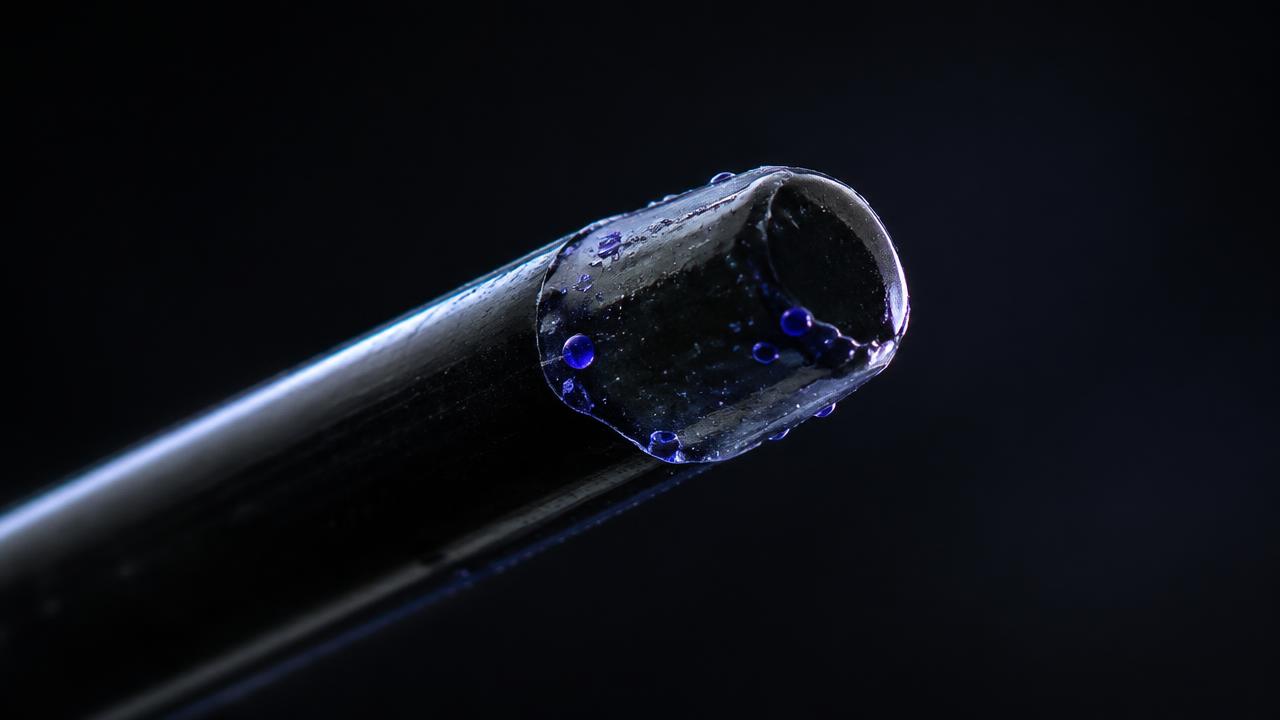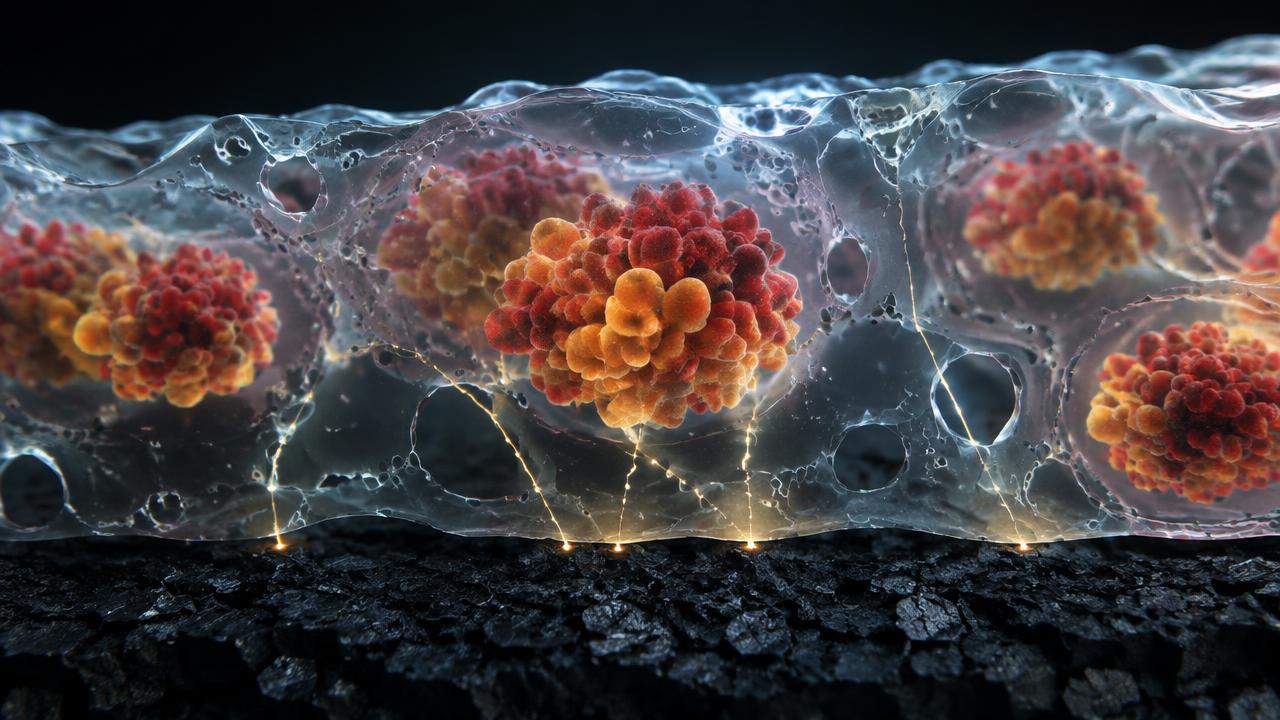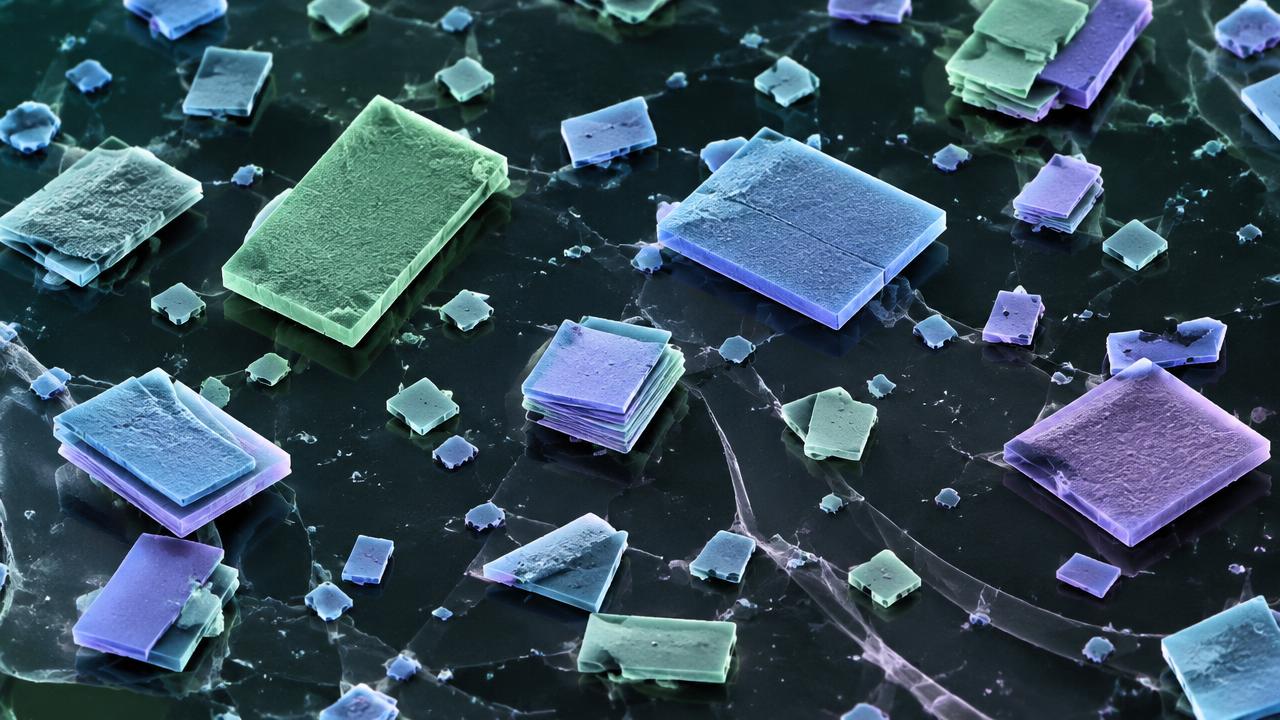
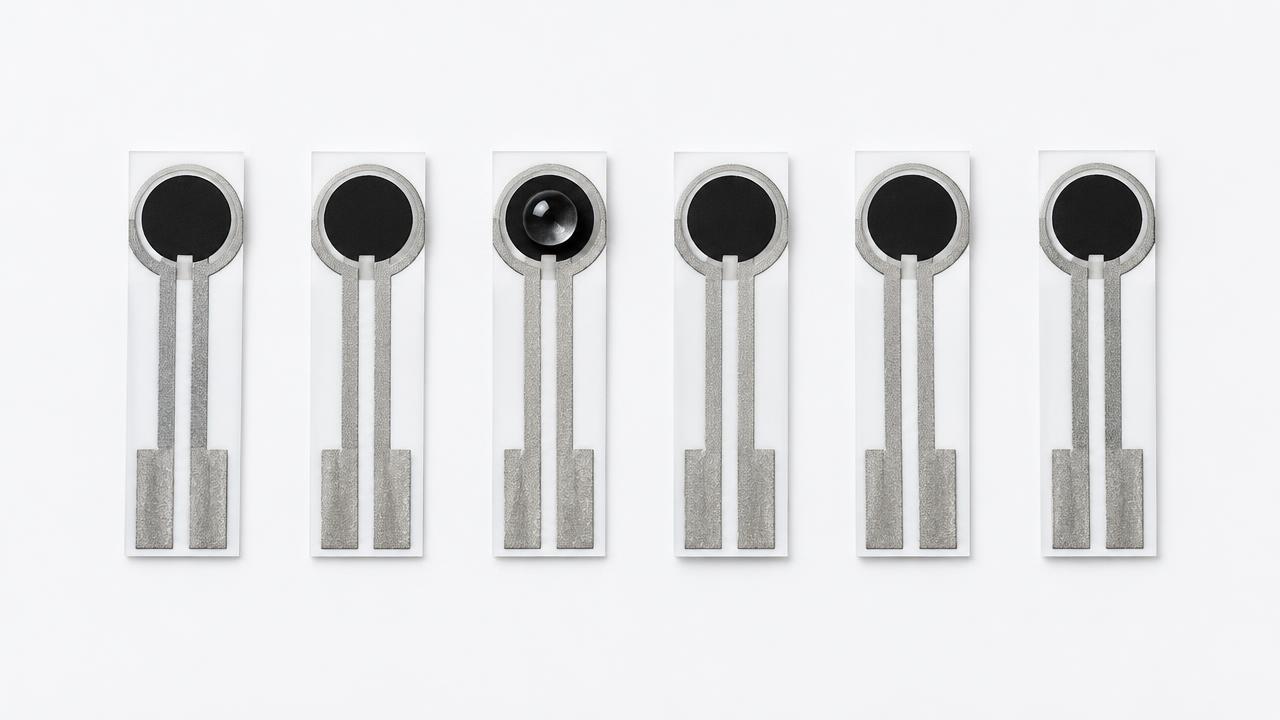
Nitrite needs monitoring in drinking water, food and clinical samples, yet no established method combines simplicity, sensitivity, selectivity, speed and portability. This proof-of-concept study set out to show that effective nitrite tests could be mass-produced as small, disposable screen-printed electrodes. The key step was mixing the nitrite reductase enzyme (ccNiR) directly into the same carbon ink used to print the electrodes. That could simplify manufacturing by removing a separate enzyme-coating stage.
Testing ink solvents and curing temperatures showed acetone and a mild 40 °C cure preserved the enzyme best, a sign of its robustness under harsh processing. On disposable screen-printed strips, the sensor reached a sensitivity of 0.55 A M⁻¹ cm⁻², a linear range of 0.7–370 µM and a detection limit of 1.2 µM. Strips stored dry at 4 °C kept 90% of their activity after three weeks. Reproducibility between hand-made strips was about 20%, which the authors expected automated printing to fix.
Because dissolved oxygen interferes at the negative potentials the enzyme needs, the team replaced lab-only argon purging with a two-enzyme scavenger, glucose oxidase plus catalase, that removes oxygen within 10 minutes and holds it out for about an hour. Sensitivity dropped somewhat but remained strong. Spiked tests on drinking and tap water, milk, urine and plasma recovered 96–106% of the added nitrite. The next goal named was immobilizing the scavenger on the strip for a truly reagent-free device.