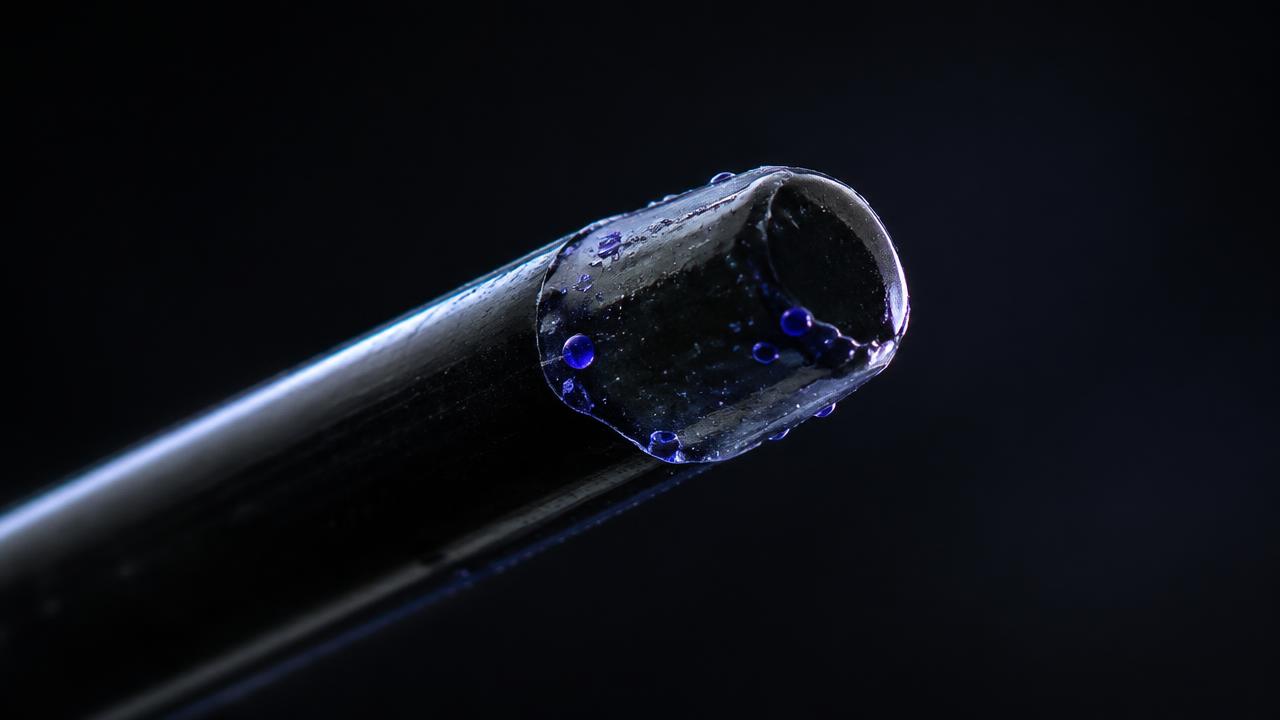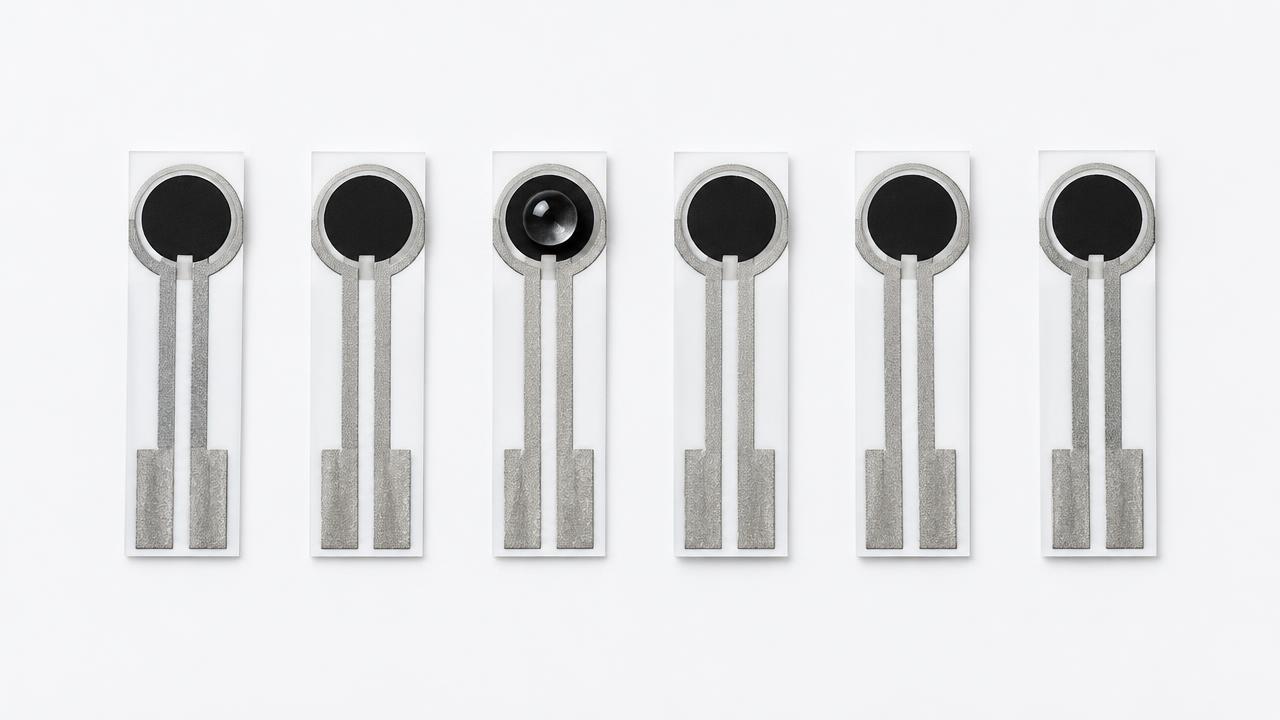
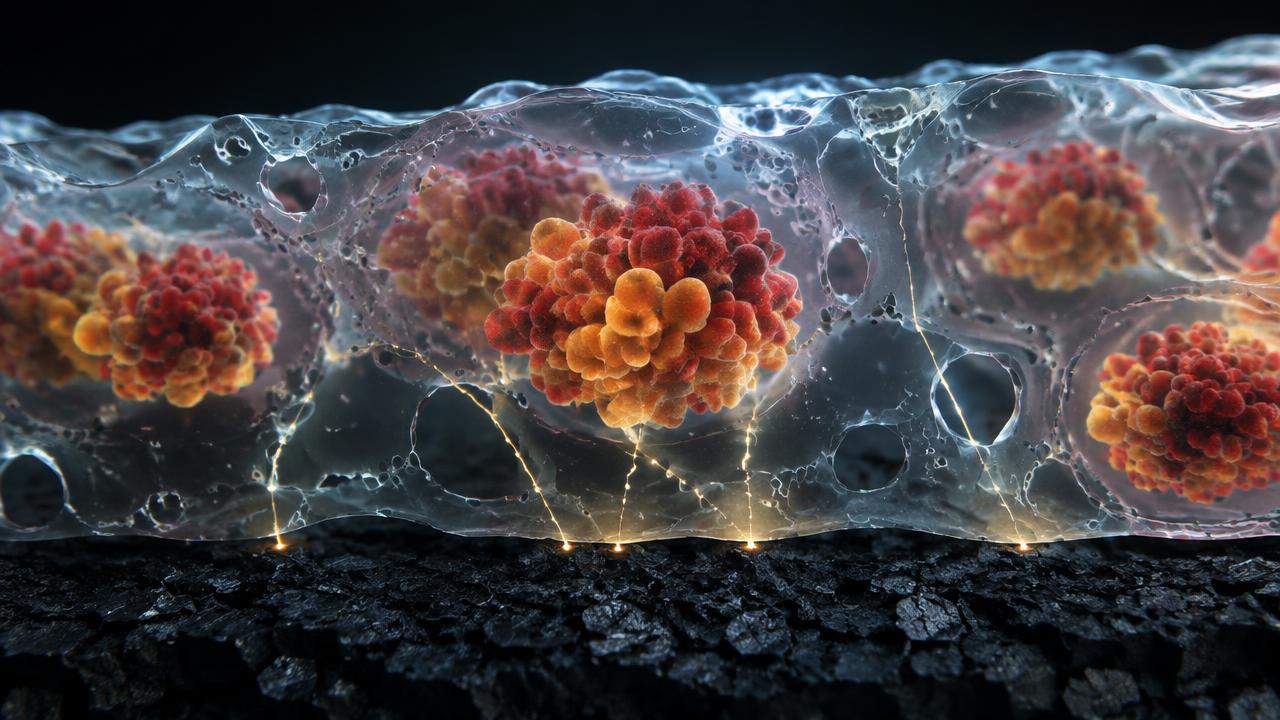
Earlier nitrite sensors built on the enzyme cytochrome c nitrite reductase (ccNiR) relied on artificial chemical mediators to carry electrons, which can leak and complicate manufacturing. The ideal is direct electron transfer, where the enzyme exchanges electrons with the electrode itself. This study achieved that by encapsulating ccNiR in a porous silica glass formed by the sol–gel process on a pyrolytic graphite electrode, with no mediator or electron relay at all. That result is notable because the large enzyme aggregates sit inside a non-conductive silica network.
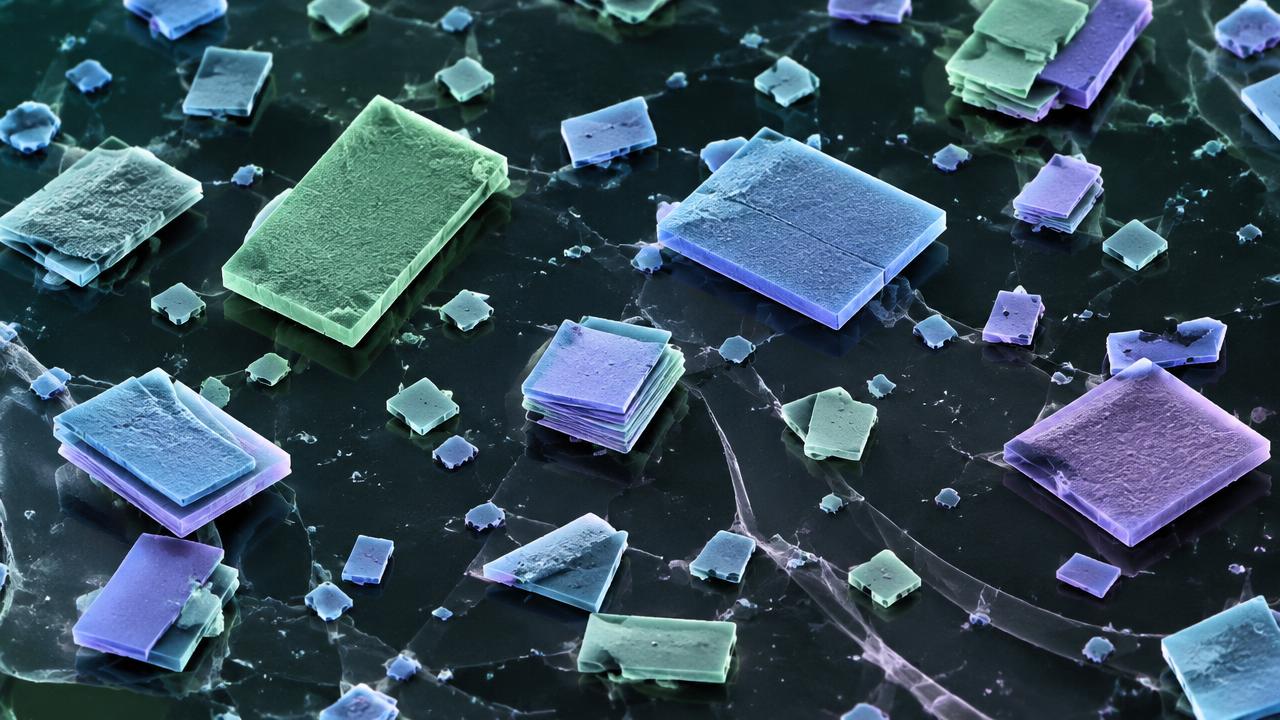
The team compared two silica precursors and several water-to-silane ratios. TEOS-based films cracked and reproduced poorly, so the more reproducible EETMS formulation at a 225:1 ratio was chosen, with about 590 pmol cm⁻² of enzyme. Microscopy and spectroscopy confirmed the enzyme stayed intact inside the matrix, and a −0.9 V working potential gave the broadest response.
The sensor responded within 5 seconds and was linear from 0.25 to 50 µM nitrite, with a 120 nM detection limit, well below the EU drinking-water limit. Sensitivity was 430 mA M⁻¹ cm⁻², varying under 11% between electrodes. Nitrate, sulfite and ammonium did not interfere, and hydroxylamine interference fell sharply versus earlier designs. Response held above 90% for two weeks, and river-water results matched the standard colorimetric method almost exactly. Oxygen interference and enzyme orientation remained open challenges.